

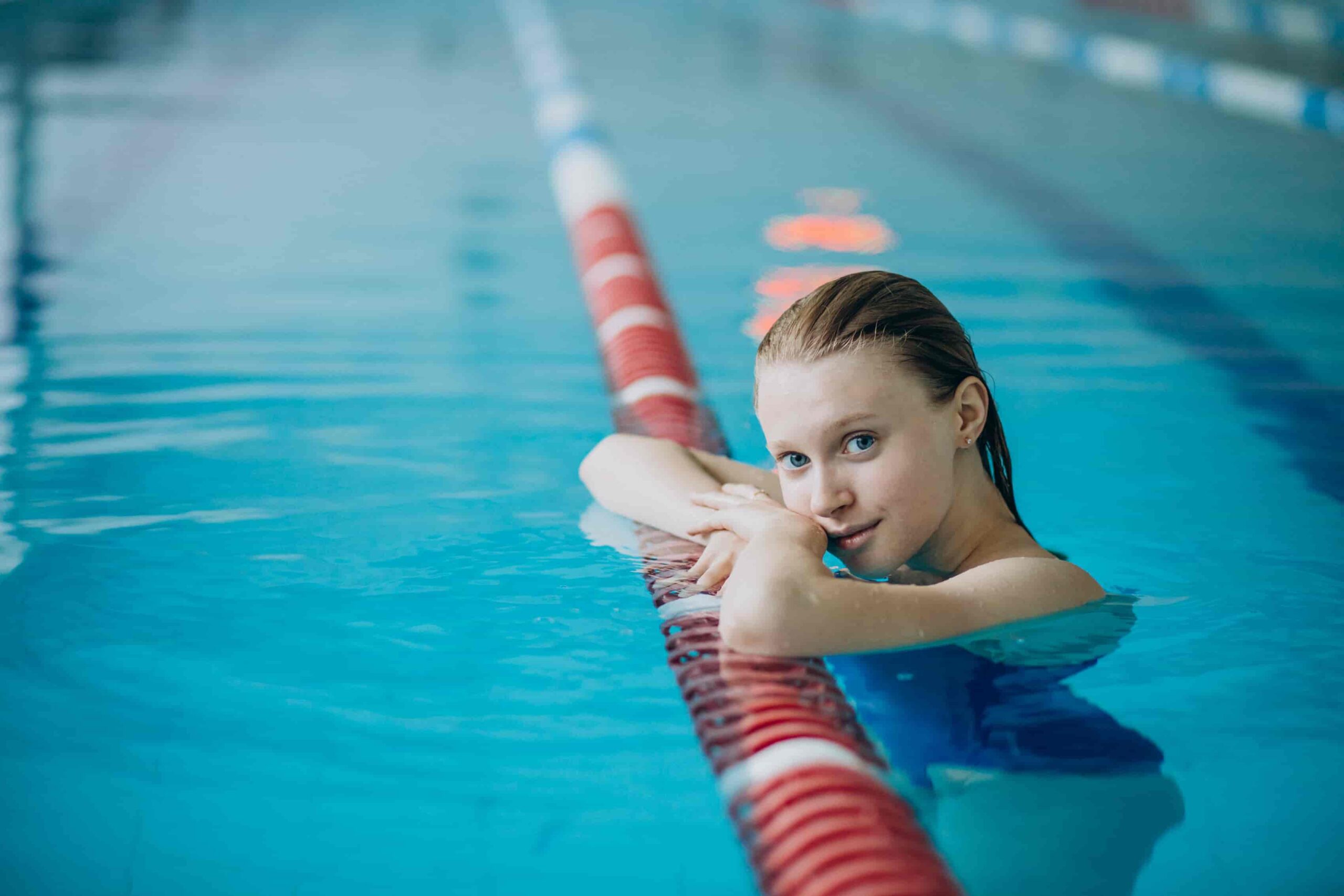
Moving in harmony with water is one of the most effective activities for supporting both physical and mental health. So, what exactly is a swimming course? A swimming course is a structured training process where individuals of all ages who love water or want to overcome their fear of water learn to stay afloat, breathe correctly, and progress using various techniques, all under the guidance of professional instructors. You not only learn a sport, but you also have the opportunity to better understand and control your body.
You can feel the changes in your body from the moment you first step into the water. The reduced effect of gravity lightens the load on your joints, maximizing freedom of movement. Laying a solid foundation in this unique sport means acquiring a skill you’ll use throughout your life. Regularly practicing swimming strengthens the cardiovascular system, increases lung capacity, and helps you relieve the stress of daily life.
The Benefits of Swimming for Our Body and Mind
Moving against the resistance of water works the muscles in a much more balanced and holistic way than many land-based sports. Almost all muscle groups in the body are activated simultaneously. Being one of the exercise forms with the lowest risk of injury makes it ideal for all age groups.
- Muscle Development and Tone: The natural resistance of water helps strengthen and tone muscles.
- Heart and Lung Health: Regular exercise regulates heart rhythm and significantly increases respiratory capacity.
- Flexibility: The body’s flexibility improves while swimming and leg kicks.
- Stress Reduction: The relaxing effect of water relieves mental fatigue and improves sleep quality.
- Weight Management: As it is a high-calorie burning activity, it helps with staying in shape.
Swimming Styles and Technical Details
There is no single way to move in water. You can learn different techniques depending on your body type, goals, and comfort level. In a professional training process, the unique mechanics of each of these styles are covered in detail.
Freestyle Swimming (Cravl)
This is the technique that first comes to mind when speed and efficiency are mentioned. It involves swimming in a prone position, parallel to the water, with the arms alternately pulling the water and the legs kicking rhythmically. Correct rotation and breath coordination form the basis of this style. If you want to cover long distances with less fatigue, perfecting Freestyle Swimming techniques should be the focus of your training.
Backstroke Swimming
Backstroke swimming is a relaxing style that eliminates breathing problems by keeping the face constantly above the water. It intensely works the back muscles and greatly contributes to correcting postural problems. Performed while looking at the sky or the pool ceiling, backstroke swimming is frequently recommended by instructors, especially for spinal health.
Breaststroke swimming
This style, which requires the arms and legs to move symmetrically, gliding through the water almost like a frog, significantly improves coordination skills. Also known as a relaxing style , breaststroke swimming is a great alternative for those who want to swim while enjoying the water and observing their surroundings.
Butterfly Swimming
Requiring strength, rhythm, and perfect timing, butterfly swimming is one of the most aesthetically pleasing techniques to watch, yet one of the most challenging to execute. It involves simultaneously pulling the arms through the water and launching them forward from the surface, while the legs perform a dolphin kick. An advanced technique , butterfly swimming helps build high levels of fitness and strong shoulder muscles.
Mixed Swimming
Mixed swimming is a versatile discipline that combines different styles, preventing training from becoming monotonous. It involves alternating styles over specific distances. To work all muscle groups in a surprising way and to maximize swimming skills, mixed swimming training should definitely be included in any program.
How does the adult swimming training process progress?
Learning a new physical skill in adulthood can seem daunting at first. Past fears of water or incorrect breathing habits shouldn’t deter you from this process. Modern training approaches aim to create a safe space while respecting the individual’s psychological boundaries.
An adult swimming program typically begins with acclimatization to the water and breath control exercises. Basic steps are taken, such as exhaling while submerging the face (bubble blowing) and lying freely (starfishing) while feeling the buoyancy of the water. Then, progress is made to leg kicks and moving forward with a board at the poolside. Your instructor will demonstrate each movement step-by-step to help build muscle memory and correct mistakes immediately. Since adults have completed their anatomical development, providing logical explanations of the mechanics of techniques makes the learning process much faster and more permanent.
Kids Swimming Lessons: Fun and Safe Steps
The role of water in children’s physical and mental development is undeniable. Children who are introduced to water at an early age develop motor skills much faster and gain self-confidence. In their world, play is the most powerful key to learning.
A quality children’s swimming lesson involves playful exercises rather than boring repetitions. Methods such as collecting colorful rings underwater or imitating animals demonstrated by the instructor in the water help children love the water and forget their fears. Instructors with pedagogical training conduct the lesson in short, dynamic periods suitable for children’s attention spans. Basic safety rules are instilled during this process, giving parents peace of mind during holidays.
How long does it take to learn to swim?
One of the most frequently asked questions is how long the process will take. There is no single answer to this question because the learning speed is entirely individual. The individual’s aptitude for water, age, motor skills, frequency of training, and any fear of water directly affect this timeframe.
An adult with no fear of water and who takes lessons at least two days a week can begin to stay afloat and move independently in 8 to 12 lessons on average. For individuals with aquaphobia, this process may take a little longer, as the focus will initially be on overcoming mental barriers. The important thing is to not rush, to be patient, and to allow time for muscle memory to develop.
Common Mistakes Made When Learning to Swim
There are some common mistakes that slow down progress in the learning process. Being aware of these will accelerate your development:
- Holding your breath underwater: Instead of holding your breath underwater, you should exhale slowly through your nose and mouth. Otherwise, your body will tense up and the feeling of sinking will increase.
- Avoiding Excessive Force: Instead of fighting the water, one should move in harmony with it. Stroking forcefully will only tire you out.
- Incorrect Head Position: Constantly trying to keep the head out of the water can lead to back and neck pain, and also cause the feet to sink into the water.
- Kicking with Bent Knees: In freestyle kicking, power should come from the hips, not the knees.
Choosing the Right Swimming Course and the PLTS Club Difference
The quality of the institution you choose is crucial in achieving your goals. The facility’s hygiene standards, water temperature, pool depth, and most importantly, the instructors’ competence should be carefully evaluated. Regular monitoring of chlorine and pH levels, and a perfectly functioning aeration system are essential for your health.
PLTS Club doesn’t just offer standard training; it provides a holistic lifestyle. Whether you’re an adult looking to overcome your fear of water or seeking a safe training environment for your child, our expert team of instructors will tailor the process entirely to your needs. Thanks to our boutique service approach, you won’t get lost in large groups; you’ll enjoy personalized attention and hygienic pool conditions. Learning the right techniques in a warm, friendly, and motivating atmosphere will completely change your perspective on water.
Frequently Asked Questions (FAQ)
1. What should I bring with me to swimming lessons?
You only need to bring your swimsuit, swimming cap, goggles, towel or bathrobe, non-slip slippers, and personal hygiene items.
2. Is wearing a swimming cap mandatory?
Yes, swimming caps are mandatory for both pool hygiene and to prevent hair from getting in your face and obstructing your vision.
3. Is it necessary to wear swimming goggles?
It is highly recommended to protect your eyes from the effects of chlorine and to ensure clear vision and navigation underwater.
4. Should we eat before the course?
A light meal should be consumed at least 1.5-2 hours before the lesson; one should not enter the pool on a full stomach.
5. How long do swimming lessons last?
Classes are typically scheduled to last between 45 and 60 minutes, taking into account the balance of focus and effort.
6. Is it possible to take swimming lessons in winter?
Yes, thanks to our indoor, heated pools, you can receive uninterrupted training throughout all four seasons.
7. Can you get sick after getting out of the pool in winter?
If you dry your hair thoroughly and wear appropriate clothing when going outside, you won’t be at risk of getting sick.
8. Can people with a fear of water learn to swim?
Absolutely; with a patient and professional approach, and through exercises in shallow water, this phobia can be overcome.
9. Does swimming help you grow taller?
In growing children, it improves posture and increases spinal flexibility, thus positively supporting height growth.
10. Can people with asthma swim?
After obtaining medical approval, this is generally the most recommended sport because the humid environment soothes the respiratory tract.
11. Which style is suitable for those with a herniated disc?
With a doctor’s recommendation, the supine position is considered quite beneficial as it reduces the load on the spine.
12. Does swimming help with weight loss?
Because it’s a high-calorie cardio workout that works the entire body, it can help with weight loss when combined with a healthy diet.
How many days a week should I attend the course in week 13?
For the development of muscle memory and the reinforcement of techniques, at least 2 or 3 days a week is ideal.
14. Is there an age limit for learning to swim?
No, anyone without a physiological disability can learn, from infancy to old age.
15. What is the earliest age at which children can start education?
Water acclimatization and parent-led playgroups start from 6 months of age, while independent technical training usually begins at 3-4 years old.
16. Do adults learn more slowly because they start late?
Because their anatomy is fully developed, they grasp logic quickly; the only difficulty is tension stemming from the past, which can be overcome with practice.
17. Does pool water chlorine harm the skin?
In regularly maintained pools, the water levels are suitable for human health; showering and using moisturizer after exiting is sufficient.
18. Is it okay to swim in a pool during menstruation?
You can continue swimming using a sanitary pad, and you may find that your cramps ease due to the effect of the water.
19. Is it possible to swim in the first lesson?
The first lesson usually involves getting acquainted with water, breathing exercises, and buoyancy skills.
20. How to prevent water from getting into the nose?
While underwater, you prevent water from entering by slowly and continuously blowing air through your nose (creating bubbles).
21. Can one keep their eyes open underwater?
The eyes can be left on for a short time, but goggles must be worn to avoid exposure to pool chemicals.
22. What should I do if water gets in my ear while swimming?
You can help the water come out by tilting your head towards the ear where the water is and gently hopping on one foot.
23. Is it necessary to use earplugs?
Individuals with sensitivities such as chronic middle ear infections should use silicone earplugs as recommended by their doctor.
24. What should I do to avoid panicking in deep water?
Once you learn to fully rely on buoyancy in shallow water, you’ll realize that deep water lifts you up just as easily.
25. Why do my legs get tired when I kick my feet?
Instead of bending your knees and kicking the water, you should make flexible and rhythmic strokes starting from the hips.
26. How to stay afloat in the water (water riot)?
The arms sweep through the water (sculling) while the legs move in a circular or bicycle motion to maintain an upright position.
27. Which swimming style is the easiest to learn?
Although it varies from person to person, the supine style is generally easier to begin with because it doesn’t cause breathing problems.
28. How to breathe in freestyle swimming?
During the arm pull, the head is turned to the side along with the body axis, and a quick breath is taken through the mouth while looking back at the water.
29. What is the difference between frog and frog?
It is a style in which the movements are performed symmetrically, the feet push off the water by circling behind them, and the head is turned forward as it emerges from the water.
30. Why is the butterfly style so difficult?
This is the most demanding style because it requires a high degree of shoulder strength, waist flexibility, and excellent timing coordination.
31. Is swimming sufficient for building muscle?
It tightens muscles and provides an athletic appearance, but should be supported by weight training for hypertrophy (excessive muscle growth).
32. Can pregnant women participate in swimming lessons?
With doctor’s approval, it is the safest exercise that can be done during pregnancy because it reduces the load on the joints.
33. What should I do to prevent cramps?
You should do warm-up exercises before your workout and drink plenty of water (hydration) throughout the day.
34. How can you tell if a pool is clean?
Water clarity, the absence of a strong chlorine odor (an excessive chlorine smell can be a sign of pollution), and regular measurement charts can provide insight.
35. Is swallowing water dangerous while swimming?
Swallowing small amounts of water is normal and stomach acid tolerates it; however, it should not become a habit due to pool chemicals.
36. Is it safe to swim with contact lenses?
Not recommended due to the risk of eye infection; if necessary, daily contact lenses should be used and discarded after the lesson, and tight-fitting swimming goggles should be worn.
Do you have swimming goggles in size 37?
Yes, special prescription swimming goggles for people with visual impairments are available on the market.
38. Why is showering before class important?
It protects water quality by preventing body sweat, perfumes, and lotions from reacting with pool chemicals.
39. Should I take a group class or a private lesson?
If you want to progress quickly and receive one-on-one attention, you can choose private lessons; if you prefer socializing and sharing motivation, you can opt for group lessons.
40. Water gets into my nose while swimming on my back, what should I do?
Gently bringing your chin towards your chest and continuously exhaling gently through your nose will prevent water from entering.
41. What should the pool water temperature be?
The ideal water temperature in training pools is generally maintained between 28°C and 30°C.
42. I panic when I can’t get past the edge of the cliff. What’s the reason for this?
This stems from losing the certainty of having your feet firmly on the ground; this panic will subside as your faith in buoyancy increases with practice.
43. Is swimming in the open sea the same as swimming in a pool?
No, while the sea has waves, currents, and the high buoyancy of saltwater, a pool is a controlled, calm, and predictable environment.
44. Why are kickboards used in swimming lessons?
By disengaging the arms, it allows you to focus solely on leg kicks, strengthening the legs and maintaining a horizontal position.
45. Can sausage (noodles) be consumed by adults as well?
Yes, it’s also a great piece of support equipment for adults, especially during the stages of staying afloat and finding horizontal balance.
46. Should I practice on my own outside of the course?
Practicing the techniques your instructor showed you in your free time will significantly accelerate your progress.
47. Does swimming broaden the shoulders?
Especially when started at an early age, it develops the back and shoulder muscles, making the shoulders appear wider.
48. Is it okay to go into a swimming pool with makeup on?
For pool hygiene reasons and to prevent your makeup from being ruined by chemicals and irritating your eyes, you should absolutely shower and clean yourself before entering the pool.
49. Should I wear jewelry and a watch when entering the pool?
Jewelry should be removed due to the risk of breakage, falling off, or scratching, as well as the possibility of pool chemicals damaging the materials.
50. What should I do if I get tired during the lesson?
You should immediately go to the poolside, inform your instructor, and rest until your heart rate returns to normal.
51. Should I watch the children’s lesson from the sidelines?
To avoid undermining the teacher’s authority and to prevent the child from being distracted, it is best for parents to wait in designated monitoring areas.
How many meters should I swim on day 52?
At the beginner level, focus should be on correct technique rather than distance; as you progress, you can aim for distances between 500m and 1500m depending on your training program.
53. Why is it important to breathe underwater?
It cleans the lungs by expelling carbon dioxide and allows you to quickly breathe in fresh oxygen when you stick your head out.
54. Are diving and swimming the same thing?
While diving involves going underwater and using different equipment, swimming generally aims to move along the surface of the water.
55. When can I swim independently?
You can swim on your own once you can control your breathing without panicking, maintain your horizontal balance, and progress steadily in at least one style.