

Water is one of the elements that makes humans feel most free, light, and peaceful. Much more than just a sport, swimming, which supports physical health and provides mental cleansing , is one of the most valuable skills people of all ages can add to their lives. This unique activity, which stands out with its countless benefits such as physical fitness, cardiovascular endurance, stress management, and muscle development, transforms into a completely different experience when combined with PLTS Club’s professional and innovative training approach.
Whether you’re an adult looking to overcome your fear of water, or you’re searching for a safe and reliable learning environment to support your child’s physical and mental development, achieving your goals is possible with the right guidance and techniques. A connection with water boosts self-confidence and positively impacts one’s outlook on life. In this comprehensive guide, we delve into every detail you might be curious about, from the basics of swimming to advanced styles, from children’s training processes to adults’ adaptation to water. If you’re ready to see water not as an obstacle, but as a living space, let’s begin this unique journey together.
Why Should We Swim? The Key to Physical and Mental Development
The buoyancy of water takes up a large portion of our body weight, reducing the load on our joints. This is the most important feature that distinguishes swimming from many other sports. This sport, which has a minimal risk of injury, is one of the rare disciplines that works all muscle groups simultaneously. Regular swimming strengthens the heart muscles, increases lung capacity, and regulates blood circulation. Furthermore, the natural hydrotherapy effect of water on the body relieves the stress and tension of the day, providing mental tranquility.
The effects of swimming on the body are not limited to physical strengthening. Learning proper breathing techniques improves the quality of breathing in daily life and helps reduce concentration problems. Postural problems, back and neck pain, which are frequently seen in adults who work at desks, can be largely alleviated with regular swimming exercises. The rhythmic nature of movements in the water creates a meditative effect, calming the mind and allowing the individual to live in the moment.
Reconnecting with Water for Adults: It’s Never Too Late

In our society, there is a common misconception that swimming can only be learned in childhood. However, with the right pedagogical approach and expert instructors, it is possible to acquire this skill at any age. If you have previously built an insurmountable barrier between yourself and the water, or if you want to improve your existing techniques and reach a more professional level, our Adult Swimming programs are designed for you. In these programs, our focus is primarily on helping individuals become comfortable with the water, mentally understanding the mechanism of staying afloat, and then building the correct techniques step by step.
In adult swimming training, the most common issue is water phobia stemming from negative past experiences. Our instructors at PLTS Club analyze adult psychology and learning processes very well, creating a completely personalized, patient, and reassuring roadmap. Basic steps such as breath control in the water, staying afloat with supporting equipment like a swimming board and buoys, leg kicks, and arm pulls are taught at the individual’s own learning pace, without rushing. In this way, adults begin to see water not as a threat, but as an enjoyable exercise area. The indescribable feeling of accomplishment from pushing your limits and gliding freely on the water is one of the greatest rewards you can gain in adulthood.
An Early Journey to Health and Self-Confidence for Children
The role of sports in children’s physical growth and mental development is undeniable. Swimming ensures the symmetrical and balanced development of the musculoskeletal system while maximizing a child’s coordination skills. Our Children’s Swimming Lessons program at PLTS Club combines children’s natural curiosity about water with professional training, preparing them for the future as healthier, more disciplined, and more confident individuals.
One of the most frequently asked questions by parents is, “Does children’s swimming lessons contribute to their development?” The answer is definitely yes. Swimming not only improves motor skills, but also teaches children fundamental social skills such as goal setting, following rules, waiting in line, and group communication. Children who are introduced to water at an early age get to know their own bodies better and become aware of their physical capabilities. This increases their attention span in school and positively impacts their academic success.
Age Groups and Approaches in Children’s Swimming Education
In the educational process, children’s ages and developmental levels are the most fundamental factors determining the method to be applied. Families frequently contact us with questions such as, “Do you have baby swimming lessons?”, “Do you have 3-year-old swimming lessons?”, or “Do you have 4-year-old swimming lessons?”. At PLTS Club, we have special programs tailored to the motor skills and cognitive level of each age group.
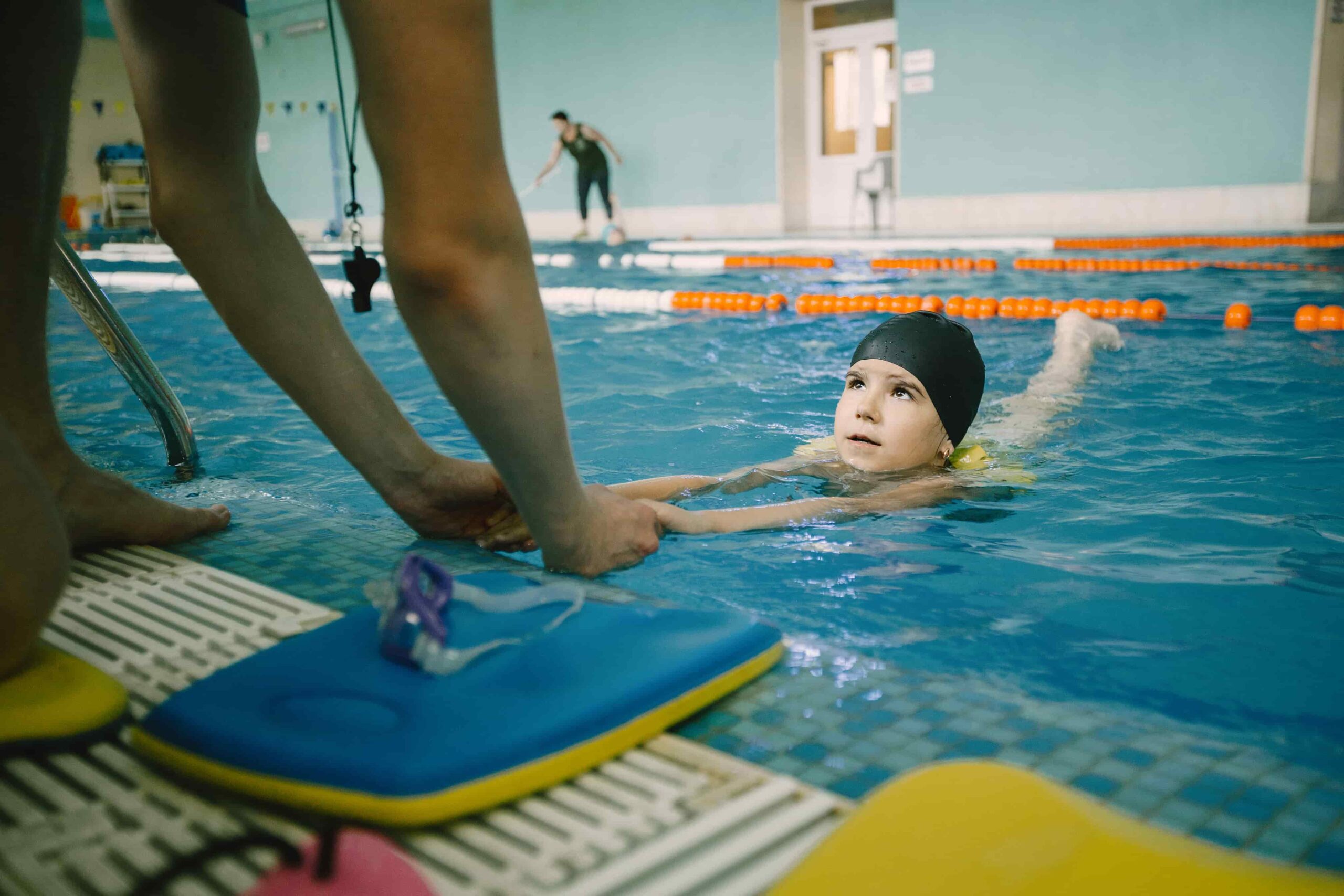
- Early Adaptation to Water (3-4 Years): The goal at this stage is not to teach techniques, but rather to foster a love of water and instill basic water safety skills. For parents concerned about the safety of children’s swimming lessons, we would like to state that classes at this age are entirely playful, conducted in very shallow water, and involve one-on-one interaction with the instructor.
- Development of Basic Skills (5-6 Years): The answer to the question “Are there swimming courses for 5-year-olds?” points to the most productive period for laying the technical foundations of swimming. At this age, children understand and follow the instructor’s instructions more clearly.
- Technical and Style Development (Ages 7 and Up): At this stage, children are fully proficient in the water and ready to learn the biomechanics of different swimming styles.
Children’s Swimming Course Training Process and Details
There is no single mathematical answer to questions that often puzzle parents, such as “How many lessons does it take for children to learn to swim?” or “How long does a children’s swimming course last?”. Every child’s anatomy, aptitude for water, and psychological state are different. However, to give a general overview, a child who is not afraid of water can acquire basic aquatic and self-rescue skills in an average of 8 to 12 lessons. Mastering a professional style requires a longer period of consistent practice.
Regarding the frequency of training, in response to the question “How many days a week are children’s swimming lessons?”, participation at least 2 days a week is recommended to allow for the development of muscle memory and the reinforcement of what has been learned. The duration of lessons is generally planned between 40-50 minutes, taking into account children’s attention spans and the maintenance of body temperature, in accordance with the standards for “How long does a children’s swimming lesson last?”. The number of lessons in a children’s swimming course varies depending on the chosen package program, ranging from 8 lessons per month to longer-term plans based on specific courses.
The way lessons are conducted is also important for parents. For those wondering, “How are the group lessons for children’s swimming courses?”, we should mention that our group lessons are structured homogeneously according to the age and skill level of the children. The answer to the question, “How many children are in a children’s swimming course?”, is that the number of students per instructor is generally limited to between 4 and 6, without compromising quality. This allows sufficient time for each child. Furthermore, for parents who believe their child has more specific needs or want faster progress, we also offer the option of “Does the children’s swimming course offer private lessons?”.
The foundation of quality education lies in competent staff. The question, “Who are the instructors in children’s swimming courses?” is of great importance to us. All our instructors at PLTS Club are professionals with pedagogical training, full lifeguard certifications, an understanding of child psychology, and expertise in their field. Regarding the question, “What equipment is used in children’s swimming courses?”, kickboards, pull buoys, noodles, fins, and underwater toys make the process both safe and enjoyable.
Discover Swimming Styles: The Secrets to Flawless Flow in the Water
After mastering basic water safety and buoyancy skills in swimming training, the most exciting stage is learning different swimming styles. Each style targets different muscle groups and requires its own unique rhythm, breathing technique, and coordination. At PLTS Club, with expert instructors, you can skillfully learn the styles best suited to your physical build and goals.
1. The Symbol of Speed and Dynamism: Freestyle
Freestyle swimming is the most well-known, frequently practiced, and speed-advantageous swimming technique worldwide. This technique, which allows you to move through the water like an arrow, combines body rotation, correct arm strokes, and a continuous leg kick. In our freestyle swimming training, we cover in detail the position of the head in the water, breathing rotation (periodical breathing from the right or left), and how to minimize water resistance while stroking. This style is an excellent choice for those who want to increase cardiovascular endurance and maximize calorie burning.
2. Free Breathing, Correct Posture: Backstroke Swimming
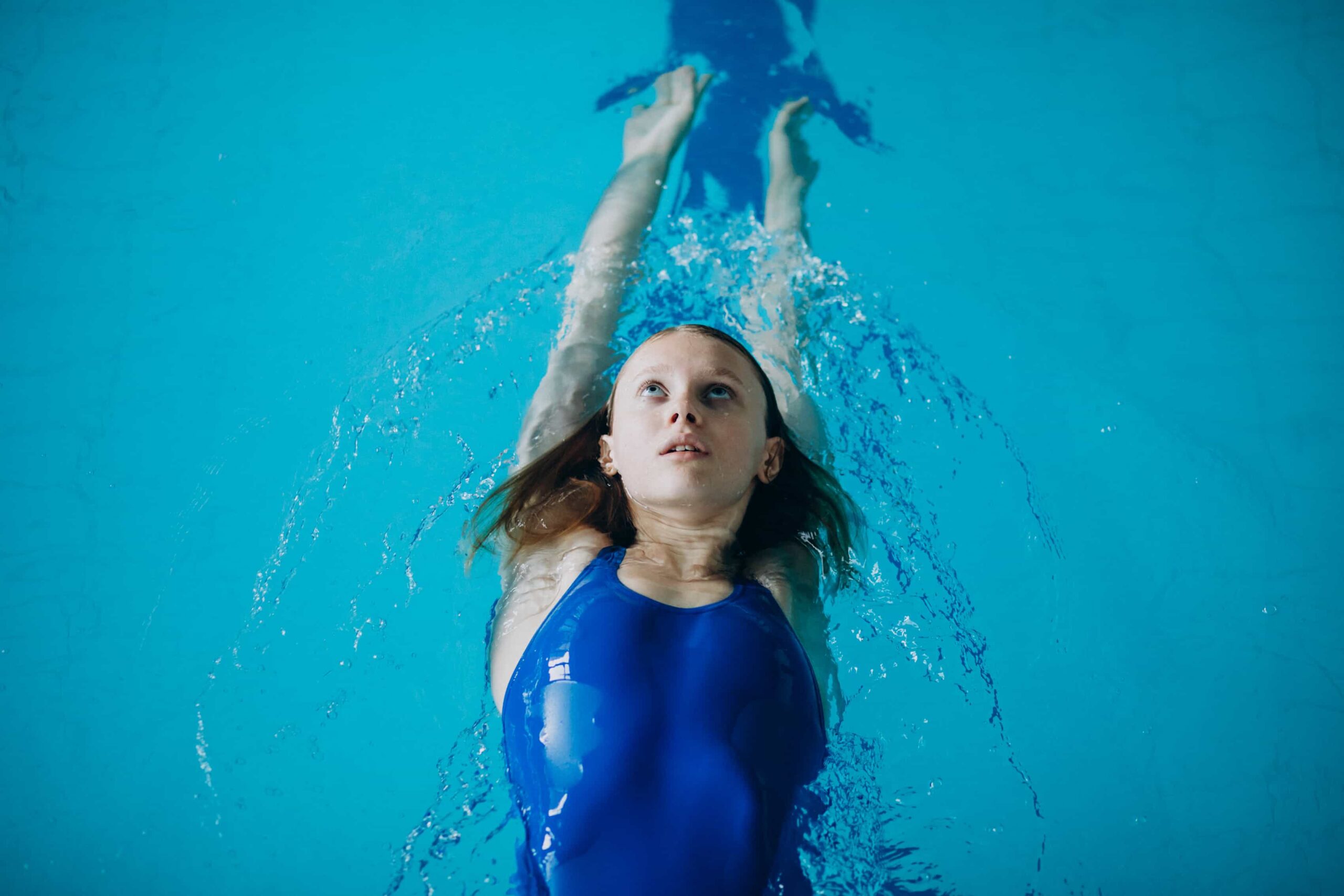
This technique, which eliminates breathing problems by keeping your face constantly above water, is also extremely beneficial for spinal health. It is frequently recommended by doctors for those who work hunched over at a computer all day or those with postural problems (kyphosis). Backstroke swimming works the shoulder and back muscles while opening the rib cage. During training, the focus is on correctly positioning the head, keeping the hips above the water surface, and making a smooth entry of the arms into the water from behind.
3. The Rhythm of Nature, the Power of Timing: Breaststroke Swimming
Breaststroke is one of the oldest and most technical swimming styles, named after the way a frog swims in the water, where movements are performed symmetrically and simultaneously. This technique requires perfect timing and flexibility rather than strength. When learning breaststroke , the goal is to correctly code the “pull, kick, reach, and slide” rhythm into the brain and muscles. It works the leg muscles (inner thigh, thigh, and hip) and chest muscles tremendously.
4. The Pinnacle of Strength, Aesthetics, and Fitness: Butterfly Swimming
Butterfly swimming is the most visually impressive and physically demanding swimming style. It requires immense strength in the shoulder, back, and core muscles. Training in butterfly swimming is usually started after achieving a certain level of proficiency in other basic styles. The body’s dolphin-like rippling motion in the water (dolphin kick) is the driving force of this style. The simultaneous pulling of both arms to propel the body forward and upward, and the ability to fit breathing into this short time frame, requires a high level of coordination.
5. Supplementary Swimming Exam: Individual Medley Swimming
To prove you are a true master in the water, you need to be able to swim all styles consecutively in a specific order and discipline. Individual Medley , swum in butterfly, backstroke, breaststroke, and freestyle in sequence , tests the athlete’s versatility, endurance, and ability to quickly switch between different rhythms. This training program is designed to improve the conditioning of advanced swimmers, work all muscle groups equally, and perfect their speed in technical transitions (including turns).
How to Choose Your Program? Tips for Taking the Right Step
Clearly defining your expectations and goals when starting your swimming journey is crucial for the effectiveness of the process. When choosing a program that is right for you or your child, you should consider the following factors:
- Current Level: Do you have a fear of water? Can you stand unsupported in the water? If you have no experience, it’s best to start with basic water adaptation classes.
- Personal Goals: Is your goal simply to live a healthy life and relieve stress, or to improve your techniques and progress towards becoming a licensed athlete?
- Time Management: Swimming is a thankless sport; you can quickly lose your sense of the water if you take a break. Therefore, you should choose a sustainable program.
Frequently Asked Questions (FAQ)
Below you will find answers to 60 of the most frequently asked questions about swimming lessons:
- 1. At what age do children’s swimming lessons start? Adaptation lessons begin from the age of 3.
- 2. Is the children’s swimming course safe? Yes, a 100% safe environment is offered with professional instructors and lifeguards.
- 3. How long does a children’s swimming lesson last? Each lesson usually lasts 45-50 minutes.
- 4. What is the price of children’s swimming lessons? Prices vary depending on the package contents; contact us for more information.
- 5. How many days a week are children’s swimming lessons? It is generally recommended to have lessons twice a week.
- 6. How many lessons are there in a children’s swimming course? A standard program consists of 8 lessons per month.
- 7. How many lessons does it take for children to learn to swim? On average, they acquire the ability to stay afloat in 10-12 lessons.
- 8. Where are the children’s swimming courses in Istanbul? We offer our services in modern facilities located in central locations.
- 9. How are the children’s swimming lessons conducted in group classes? They are held in small groups, divided according to skill levels.
- 10. Who are the instructors at the children’s swimming course? They are professional swimmers with pedagogical training.
- 11. Do you offer baby swimming lessons? Special parent-accompanied programs should be researched for children under 3; we have programs for children over 3.
- 12. Do you have swimming lessons for 3-year-olds? Yes, we have a water adaptation group.
- 13. Do you offer swimming lessons for 4-year-olds? Yes, we have basic, play-based training programs.
- 14. Do you have swimming lessons for 5-year-olds? Yes, that’s our main age group where technical skills begin.
- 15. Does children’s swimming lessons contribute to development? Yes, it supports muscle development and height growth.
- 16. What equipment is used in children’s swimming lessons? A board, inflatable rings, fins, and underwater toys.
- 17. Is children’s swimming lessons fun? Yes, the lessons are taught using games.
- 18. How long does a children’s swimming lesson last? The standard duration is 45-50 minutes.
- 19. How many students are in a children’s swimming course? Group lessons usually have 4-6 students.
- 20. Do you offer private swimming lessons for children? Yes, we offer one-on-one instruction options.
- 21. At what age can one learn to swim? It’s possible to learn at any age; from 3 to 70 years old.
- 22. Does swimming help with weight loss? Yes, it can burn 500-800 calories per hour.
- 23. What is the ideal pool water temperature? 28-30 degrees Celsius is ideal for children.
- 24. Can adults who don’t know how to swim learn? Absolutely, our adult programs are focused on that.
- 25. Is the pool water hygienic? Yes, periodic chemical and biological measurements are taken.
- 26. Does swimming in winter make you sick? No, as long as you dry yourself properly, it strengthens the immune system.
- 27. What clothes are needed for swimming? Swimsuit, swimming cap, and goggles.
- 28. Is wearing a hairnet mandatory? Yes, it is mandatory for hygiene and to prevent hair loss.
- 29. Are glasses necessary? They are recommended for eye health and technological advancement.
- 30. Should you eat before swimming? You should stop eating at least 1.5-2 hours beforehand.
- 31. Is freestyle swimming difficult? Once you learn basic breathing techniques, it’s the easiest style.
- 32. Does backstroke swimming help with neck pain? Yes, it relieves the spine.
- 33. How long does it take to learn butterfly swimming? After mastering other styles, it may take 1-2 months.
- 34. Is breaststroke the slowest swimming style? Technically yes, but it’s one of the most power-intensive.
- 35. What is medley swimming? It is swimming four styles (butterfly, backstroke, breaststroke, freestyle) in sequence.
- 36. Does chlorine in the pool harm the skin? Showering after class removes the chlorine.
- 37. Does swimming make you taller? It helps with spinal alignment in growing children.
- 38. Is swimming good for scoliosis? Yes, it is frequently recommended by doctors.
- 39. Can pregnant women swim? With doctor’s approval, swimming is the best sport during pregnancy.
- 40. How to overcome fear of water? Through exercises in shallow water with a qualified instructor.
- 41. What should I bring to swimming lesson? Swimsuit, towel, flip-flops, swimming cap, goggles, and spare clothes.
- 42. Is attendance at classes mandatory? Continuity is essential for development.
- 43. Is a health report required for registration? Yes, a general health declaration is required.
- 44. Is swimming good for asthma? Humid air can be beneficial by increasing lung capacity.
- 45. Can people with herniated discs swim? Yes, backstroke swimming is especially beneficial.
- 46. What is the depth of the pool? Our training pools are of an appropriate depth for each level.
- 47. Is there a monitoring area? Parents can follow the lessons in the designated areas.
- 48. Can the lesson be cancelled? Make-up classes are available provided 24 hours’ notice is given.
- 49. Is it possible to become a licensed swimmer? Students deemed talented are directed to performance groups.
- 50. Does swimming shape the body? Yes, it broadens the shoulders and tightens the body.
- 51. Are the class times flexible? We have different sessions on weekdays and weekends.
- 52. Is there an age limit for the adult swimming course? No, there is no upper limit.
- 53. Is swallowing water dangerous? Small amounts are not dangerous, but it should not become a habit.
- 54. When should you start using fins? They should be used to strengthen the footwork technique once it’s established.
- 55. Does swimming solve shortness of breath? It helps with proper breathing exercises.
- 56. Should earplugs be used? They can be used if you have ear sensitivity.
- 57. When is a nose clip used? It is generally preferred for backstroke and underwater training.
- 58. What is done in the first lesson? Adaptation to water and breath control exercises are performed.
- 59. When do the courses start? Registration is open throughout the year.
- 60. What makes PLTS Club different? A personalized approach and professional training quality.
Take a step that will change your life.
It’s never too late or too early to get in the water, explore your limits, defy gravity, and listen to your body. Whether you’re helping your children swim towards a healthy future or immersing yourself in the water to improve your own quality of life, achieving your swimming goals is now much easier and safer with PLTS Club’s expert instructors, hygienic facilities, and completely user-focused training programs.
Don’t wait any longer to leave your fears behind, learn a new swimming style, or take your current skills to the next level. Take action today to make this valuable investment in your health and well-being. Contact us now for detailed information and registration. See you in the water!