


Swimming is the only sport that takes advantage of a weightless environment, having miraculous effects on both physical and mental health. However, a question that frequently arises in the world of swimming instruction in recent years is: “Is working with a physiotherapist as an instructor truly essential when learning or improving swimming, or is it just a marketing strategy?” The answer to this question is directly related to how well you know your body and what your goals are.
Why is a Physiotherapist’s Touch Important in Swimming Training?
In a typical swimming lesson, the main focus is on staying afloat and moving forward. However, when you receive swimming training with a physiotherapist, the focus shifts to functional movement analysis . Physiotherapists are experts who know human anatomy and biomechanics down to the finest detail. If you have a problem such as scoliosis, herniated disc, or shoulder impingement, an incorrect arm pull or faulty rotation can trigger your existing pain.
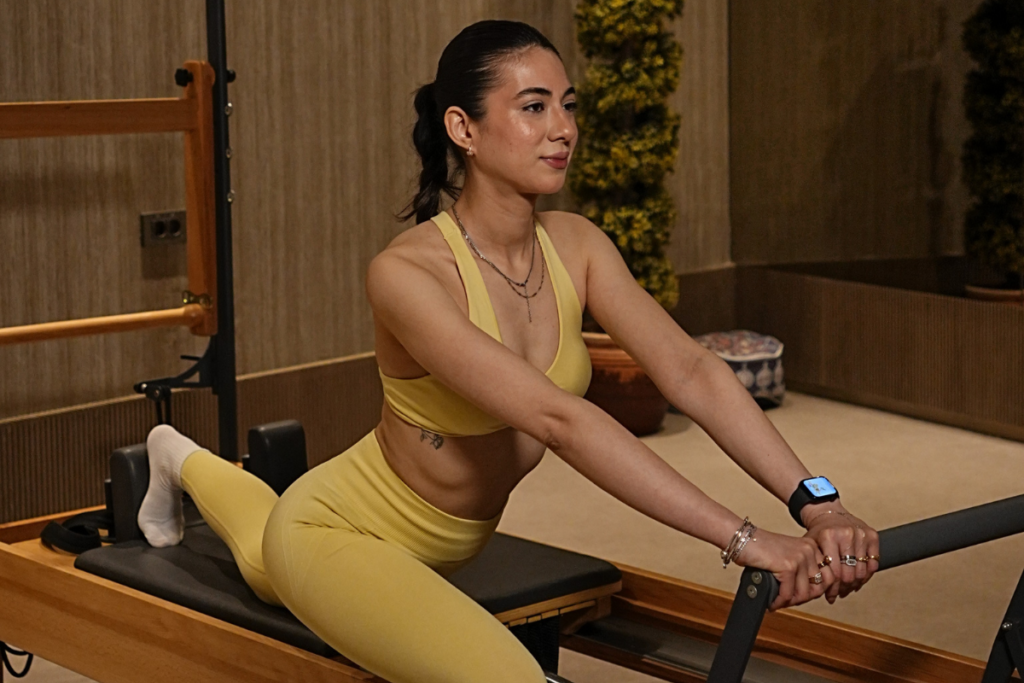
For those who choose swimming, especially for spinal health, taking the wrong position in the water can be like doing more harm than good. At this point, supportive exercises performed on land are crucial. For example, strengthening your core with Mat Pilates sessions to increase body awareness and provide stability in the water directly impacts your swimming performance.
For whom is a physiotherapist trainer a necessity?
If you are a perfectly healthy individual, a good swimming coach can teach you the techniques. However, if you have any of the following conditions, physiotherapy support is not a luxury, but a necessity:
- Chronic Pain and Herniated Discs in the Neck and Back: Although the buoyancy of water reduces the load on the spine, incorrect technique can put pressure on the nerves.
- Posture Disorders: For kyphosis (hunchback) or increased lumbar curve, which are common in people who work at desks, posture correction sessions should be combined with swimming training.
- Post-operative Rehabilitation: Addressing muscle imbalances during the return to water after surgery requires expertise. Working with an instructor who understands the principles of Clinical (Rehabilitation) Pilates can double the speed of recovery.
Different Perspectives for Children and Adults
For children, swimming means developing motor skills and shaping posture. Incorrect swimming technique in a developing child can lead to chronic posture problems later in life. In adults, the focus is more on “repair.” Years of inactivity and muscle shortening limit your mobility in the water.
To master swimming techniques more quickly, a balance between flexibility and strength is essential. Reformer Pilates exercises help achieve this balance by improving your rotational ability in the water. Understanding which muscles in your body are working how much transforms swimming from just a cardio workout into a form of therapy.
Become Stronger on Land, Be Free in Water
Many professional swimmers dedicate a significant portion of their training to dryland workouts. The greatest advantage of having a physiotherapist trainer is their ability to identify your weak links and prepare you out of the water. Utilizing specific equipment like the Wunda Chair Pilates to increase lower extremity strength and hip mobility will make your kicks in the water much more effective.
If you dislike large groups and prefer the instructor to focus solely on your individual mechanics, you can achieve symmetrical strength with Individual Reformer Pilates . If you want to maintain high motivation and work with people who share similar goals, Group Reformer Pilates sessions can be a social boost.
Conclusion: Exaggeration or Investment?
The answer to the question of whether a physiotherapist is necessary for swimming lessons is: it depends on how much you value your body. If your goal is simply to cool off, any course might suffice. However, if your goal is sustainable health, a pain-free life, and efficient swimming with the correct technique, then the guidance of a physiotherapist is the wisest investment. Remember, any sport practiced incorrectly can compromise your health; the right guidance, however, will keep you fit for life.
Frequently Asked Questions (FAQ)
1. Are swimming lessons with a physiotherapist more expensive? They can be slightly more costly than standard courses because they generally require technical expertise, but they are more cost-effective in the long run as they reduce the risk of injury.
2. Are all swimming styles suitable for me if I have a herniated disc? No, especially butterfly and sometimes breaststroke can increase the mechanical load on the lower back. Your physiotherapist will determine the most suitable style for you.
3. How long does it take for an adult who doesn’t know how to swim to learn? Depending on the individual’s fear of water and motor skills, basic swimming can be learned in 8-12 lessons with regular training.
4. Will Pilates really improve my swimming performance? Yes, Pilates strengthens your core, allowing you to maintain a more hydrodynamic position in the water.
5. What is the ideal age for children to start swimming? The process of getting used to the water can begin in infancy, but 4-5 years old is generally considered ideal for technical training.
6. Does a physiotherapist or instructor change swimming technique? Rather than changing the technique, they adapt it to best suit your body type and limits.
How many days a week is enough swimming? For general health and fitness maintenance, 2 or 3 days a week, 45-minute sessions are ideal.
8. Is muscle soreness after swimming normal? Muscle soreness is normal for beginners, but sharp pains originating from the joints may indicate incorrect technique.
9. How should people with cervical straightening swim? They should avoid styles where the head is kept above water for too long (like breaststroke with the head out of the water) and opt for backstroke instead.
10. Can people with a fear of water work with a physiotherapist? Yes, physiotherapists can manage this process more safely because they are knowledgeable about human psychology and relaxation techniques as well as anatomy.
11. Swimming or Pilates for weight loss? They complement each other. Swimming burns a lot of calories, while Pilates shapes and tones your body.
12. What should I bring with me to swimming lessons? A swimming cap, goggles, flip-flops, and a suitable swimsuit are essential. Don’t forget a towel and personal hygiene items as well.
13. Is swimming risky for the elderly? On the contrary, it is the safest and most recommended sport for the elderly because it does not put strain on the joints.
14. Which swimming style is recommended for scoliosis patients? Backstroke and freestyle are generally recommended as they provide symmetrical exercise, but expert advice is necessary depending on the direction of the curvature.
15. Is online swimming instruction possible? Theoretical knowledge and land-based exercises can be taken online, but in-water practice must be done under the supervision of an instructor.